
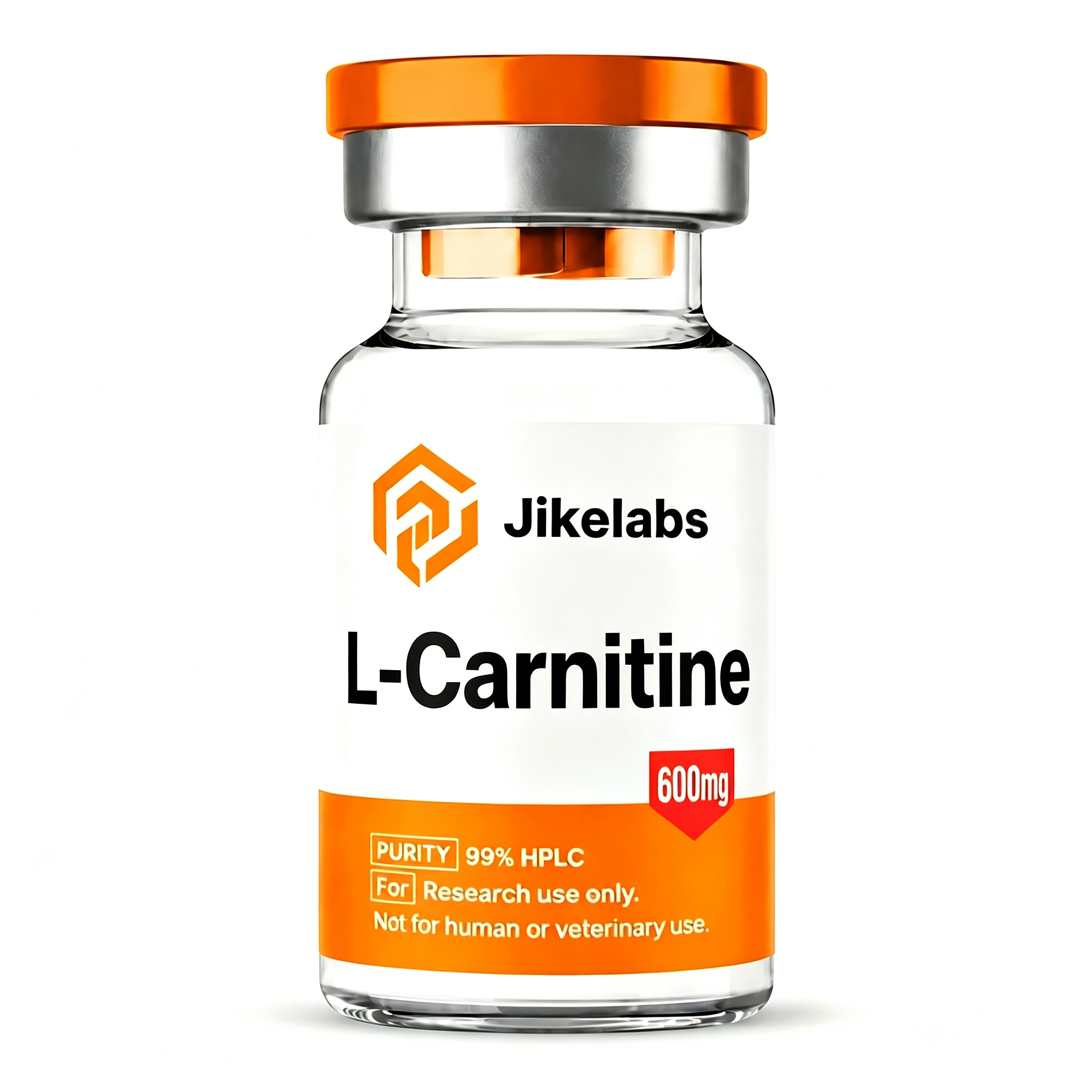
L-Carnitine 600mg
-
Detail
L-Carnitine 600mg — Mitochondrial β-Oxidation Cofactor for Research
L-Carnitine (Levocarnitine, also known as Vitamin BT) is a naturally occurring quaternary ammonium compound biosynthesized from the amino acids lysine and methionine. It is an essential cofactor in the mitochondrial β-oxidation pathway, responsible for transporting long-chain fatty acyl groups across the inner mitochondrial membrane via the carnitine shuttle (CPT1 / CPT2 system) so they can be degraded for energy production.
Beyond its central role in fatty acid transport, L-Carnitine exhibits antioxidant properties and is widely used as a reference compound in research on lipid metabolism, energy homeostasis, inborn errors of metabolism, and ischemia-reperfusion injury.
Each vial contains 1g of L-Carnitine, supplied as a white to off-white crystalline powder of research-grade quality.
▎Product Specifications
Product Name L-Carnitine Synonyms Levocarnitine; Vitamin BT; L(−)-Carnitine; (R)-Carnitine Chemical Name (3R)-3-Hydroxy-4-(trimethylazaniumyl)butanoate Molecular Formula C7H15NO3 Molecular Weight 161.20 g/mol CAS Number 541-15-1 Appearance White to off-white crystalline powder Melting Point >185°C (dec.) Solubility Freely soluble in water; hygroscopic Quantity 600mg / vial Purity ≥99% as determined by HPLC Certificate of Analysis COA available upon request / downloadable ▎Research Highlights
- Essential Cofactor for Fatty Acid Oxidation: L-Carnitine is required for the transport of long-chain fatty acyl-CoA into mitochondria for β-oxidation — a rate-limiting step in cellular fat metabolism.
- Carnitine Shuttle Research: As the substrate of the CPT1/carnitine-acylcarnitine translocase/CPT2 system, it is a standard tool compound for studying mitochondrial lipid transport and metabolic regulation.
- Antioxidant Properties: Published research indicates L-Carnitine exhibits antioxidant activity, contributing to its investigation in oxidative stress and cellular protection models.
- Inborn Errors of Metabolism Research: L-Carnitine is used to study metabolic imbalances associated with congenital disorders of fatty acid oxidation and organic acidemias.
- Broad Research Applications: Investigated in studies spanning lipid metabolism, exercise physiology, cardiac ischemia-reperfusion, and nutritional biochemistry.
▎Mechanism of Action (Summary)
L-Carnitine participates in cellular energy metabolism through well-characterized pathways:
- Fatty acid transport: L-Carnitine conjugates with long-chain fatty acyl groups (catalyzed by CPT1) to form acylcarnitines, which cross the inner mitochondrial membrane and are reconverted to acyl-CoA (by CPT2) for β-oxidation;
- Acyl-group buffering: the carnitine pool helps maintain the mitochondrial CoA/acyl-CoA balance under varying metabolic loads;
- Antioxidant support: L-Carnitine contributes to mitigation of oxidative damage in various cellular models.
▎Storage & Handling
Powder Storage Store sealed in a cool, dry place, protected from light and moisture. L-Carnitine is strongly hygroscopic; minimize exposure to ambient humidity. Solution Preparation Dissolve in sterile water or PBS; L-Carnitine is freely soluble in aqueous solutions. After Reconstitution Aliquot and store solutions at −20°C for longer-term use; use freshly prepared solutions whenever possible. Avoid repeated freeze-thaw cycles. Handling Notes Allow vial to reach room temperature before opening to reduce moisture uptake. Handle with standard laboratory protective equipment. Quality Assurance
Every batch of L-Carnitine is verified by HPLC for purity and characterized for identity and assay. A Certificate of Analysis (COA) is provided with each order, and independent third-party testing reports are available upon request.
Important Notice — Research Use Only
All product information on this page is provided solely for informational and educational purposes. The products offered are intended exclusively for laboratory and in vitro research. They are not pharmaceuticals, have not been approved by the U.S. Food and Drug Administration (FDA), and are not intended to diagnose, prevent, treat, or cure any medical condition. These products must not be administered to humans or animals. By purchasing, you confirm that you are a qualified researcher and that the product will be used only for lawful research purposes.
-
Customer ReviewsNo comments