
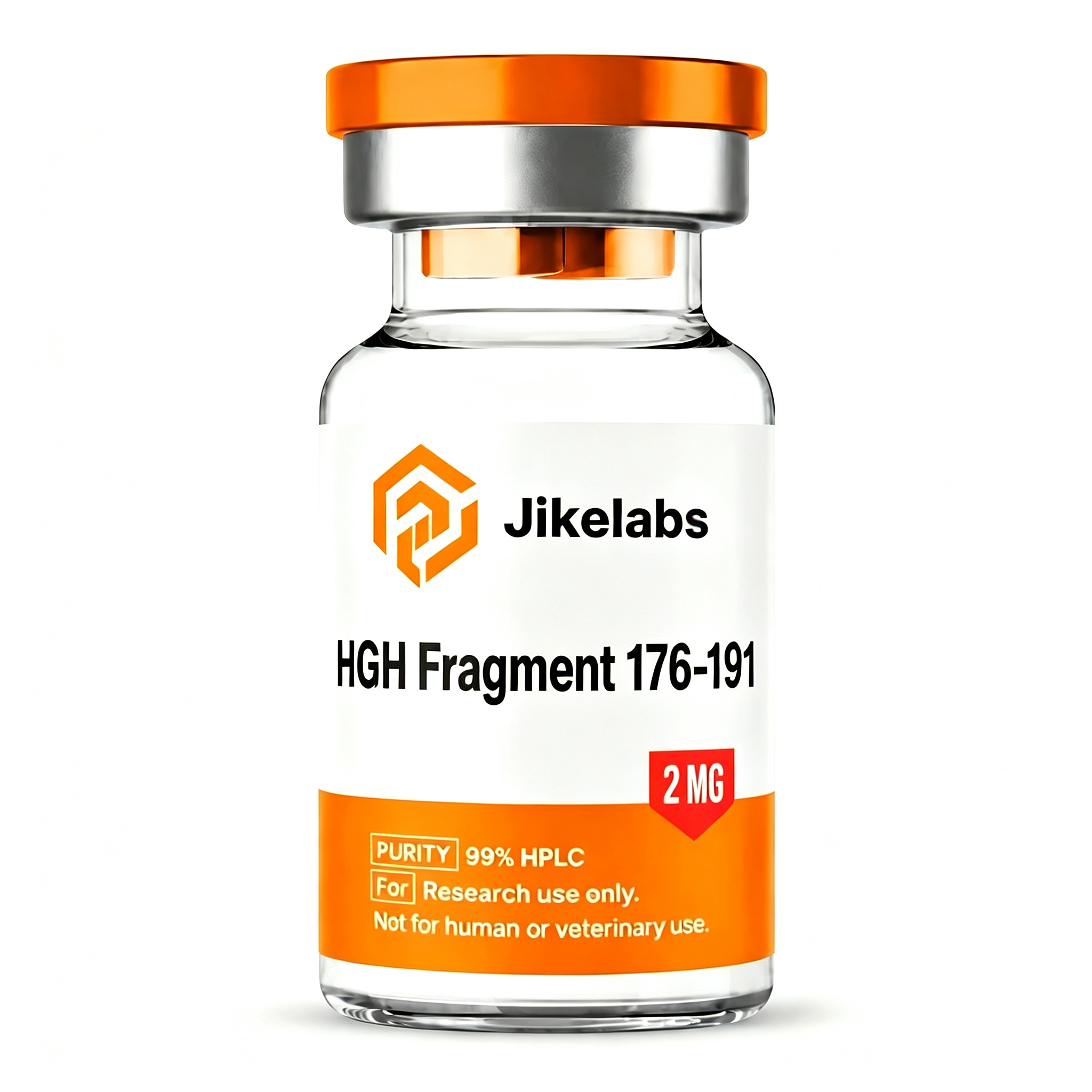
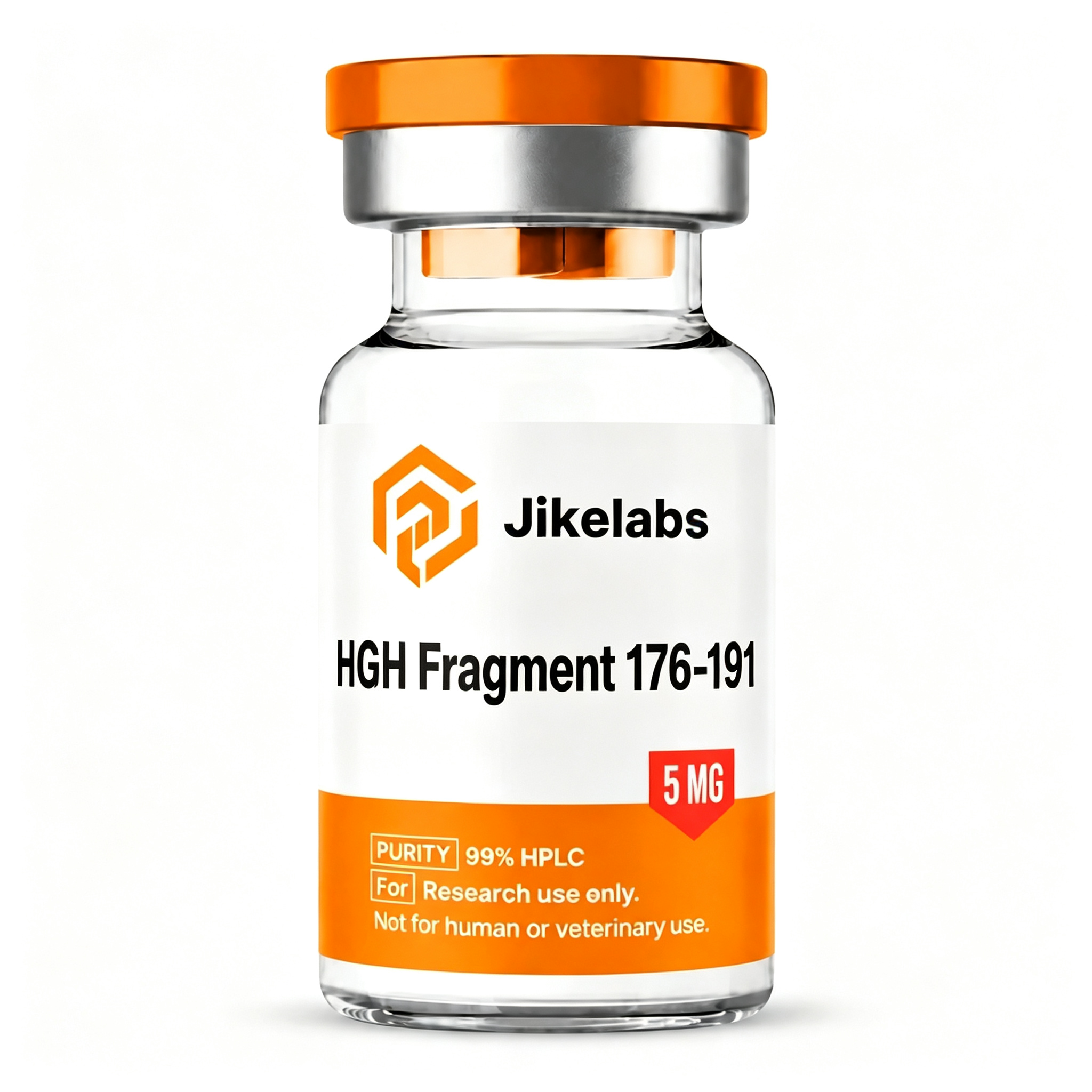
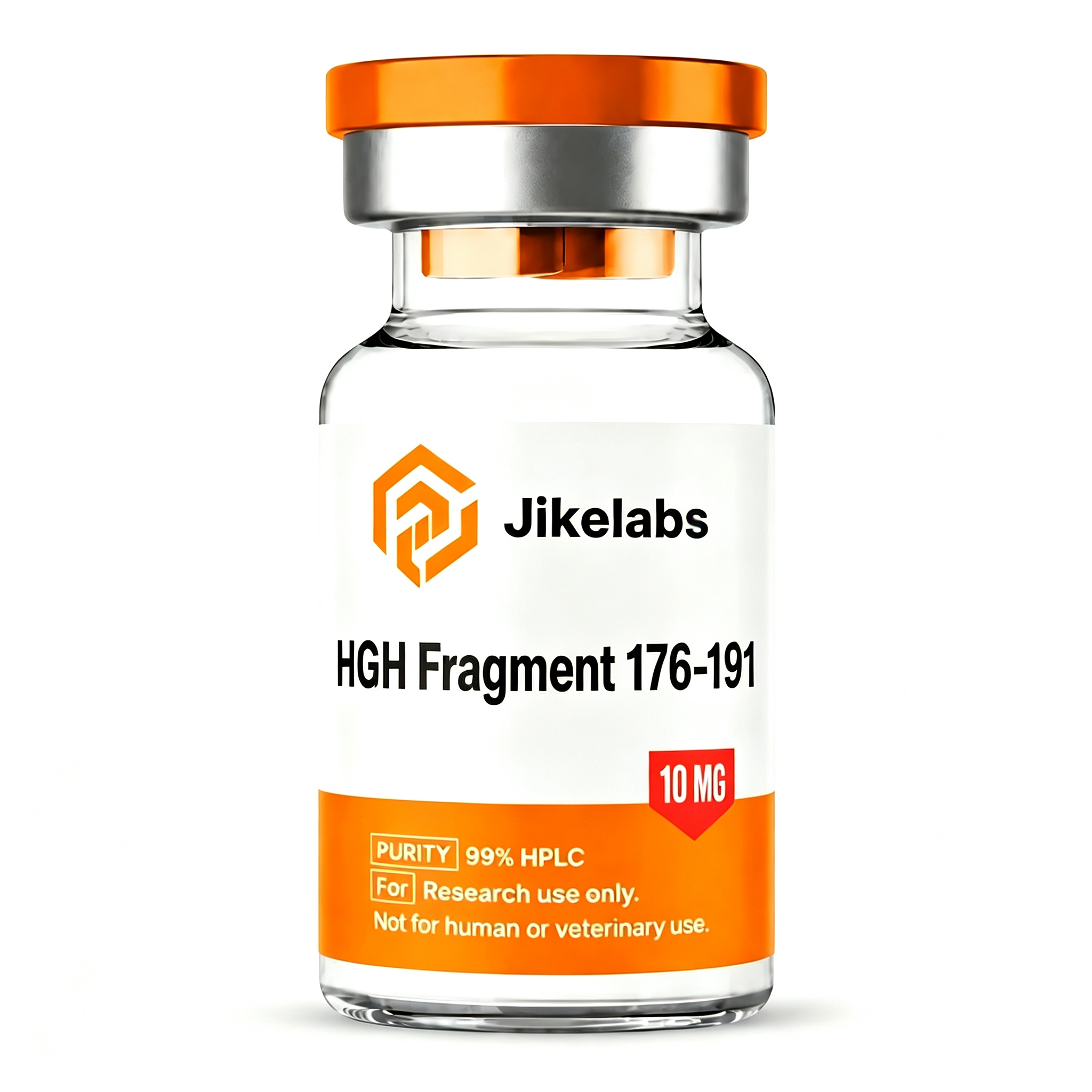
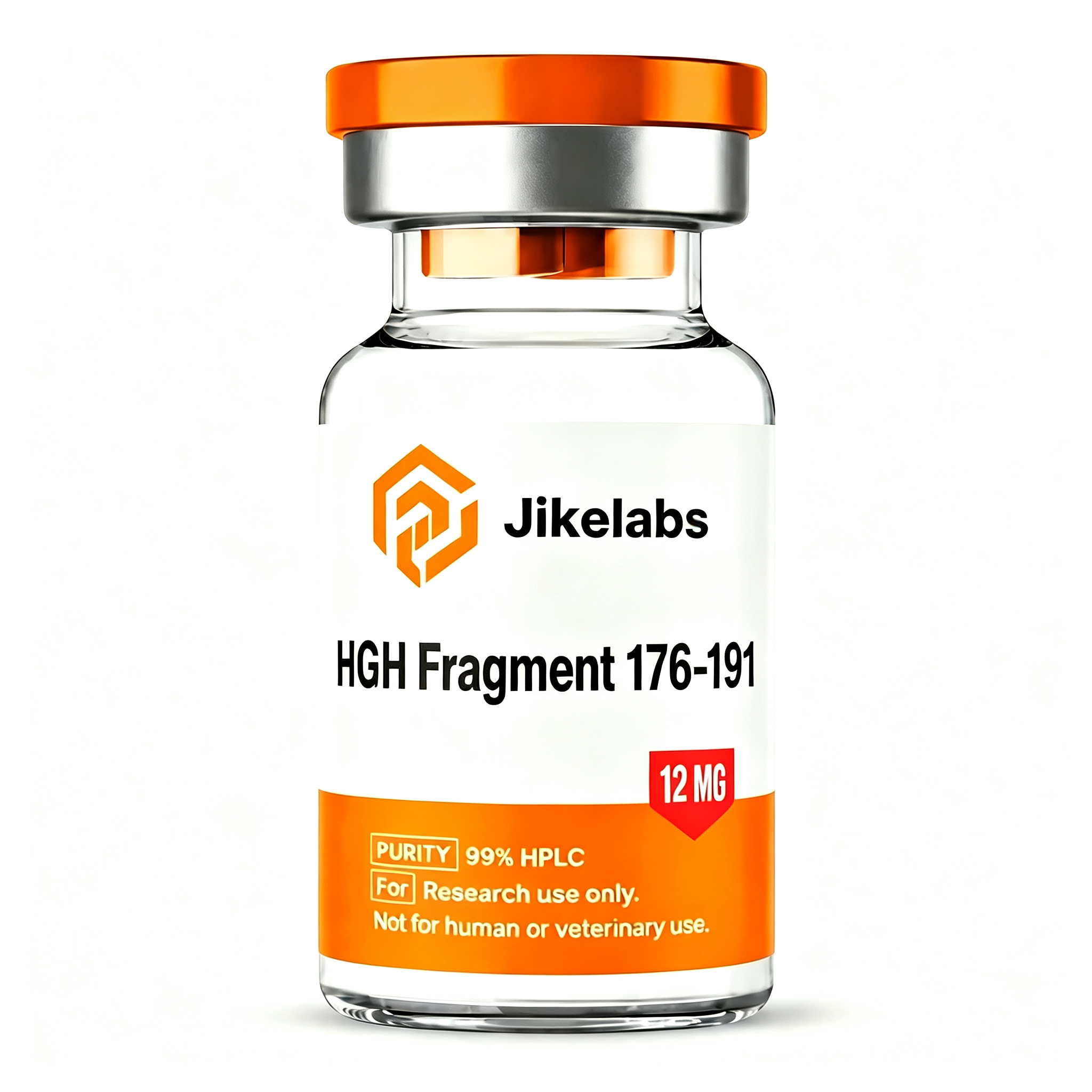
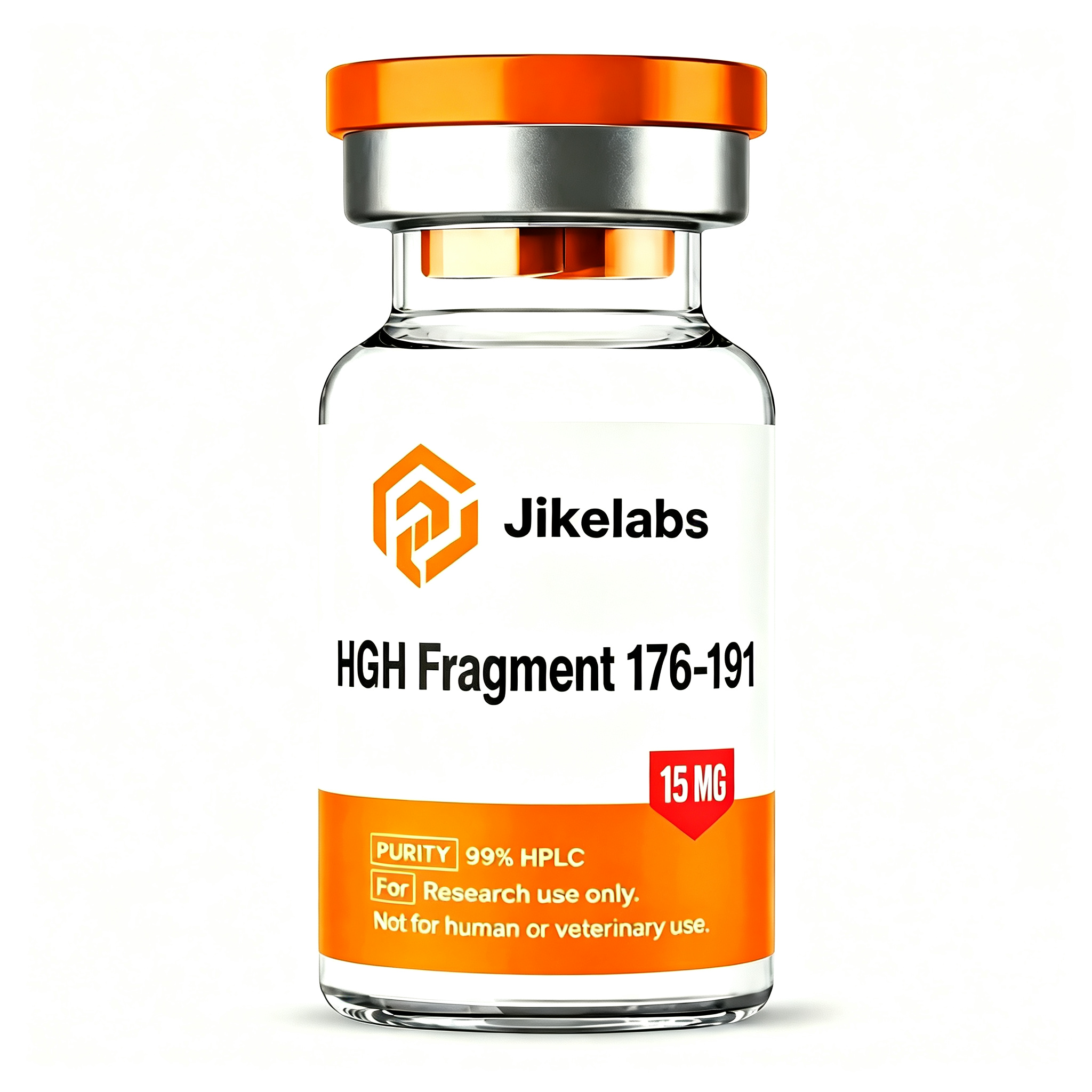
HGH Fragment 176-191 2MG-15MG
-
Detail
HGH Fragment 176-191 5mg
The Lipolytic C-Terminus of Human Growth Hormone | Fat-Metabolism Research Peptide
16-Amino-Acid hGH C-Terminal Fragment · No GH-Receptor Binding · Research Use Only
🔥 Lipolysis, Isolated
Retains the fat-breakdown activity of hGH's C-terminus — studied for stimulating lipolysis and inhibiting lipogenesis.
🧬 No GH-Receptor Effect
As a C-terminal fragment, it does not compete for the GH receptor — no growth-promoting or IGF-1 signaling in published studies.
🩸 Glucose-Neutral Profile
Multiple studies report no hyperglycemic effect — a clean lipid-metabolism tool without glucose confounders.
🧊 High-Purity Lyophilized
Freeze-dried powder with lot-specific COA; water-soluble for straightforward reconstitution.
Product Overview
HGH Fragment 176-191 (also written hGH Frag 176-191) is a synthetic 16-amino-acid peptide corresponding to the C-terminal region (residues 176–191) of human growth hormone, with the sequence Tyr-Leu-Arg-Ile-Val-Gln-Cys-Arg-Ser-Val-Glu-Gly-Ser-Cys-Gly-Phe. This region was identified as the domain responsible for growth hormone's lipid-metabolizing activity.
By isolating this tail, researchers obtained a peptide that stimulates lipolysis and inhibits lipogenesis without the anabolic and metabolic side effects of full-length hGH — notably without raising IGF-1 levels, without competing for the GH receptor, and without inducing hyperglycemia. The fragment is closely related to AOD-9604 (see comparison table below): the two share an identical amino-acid sequence, with AOD-9604 being the developmental code name that advanced into clinical trials.
Each vial contains 5mg of high-purity HGH Fragment 176-191 as a white to off-white lyophilized powder, supplied strictly for in-vitro and laboratory research use only.
Specifications
Product Name HGH Fragment 176-191 (hGH Frag 176-191) Synonyms hGH (176-191) · Growth Hormone Fragment 176-191 · Somatotropin (176-191) CAS Number 225681-50-3 Amino Acid Sequence Tyr-Leu-Arg-Ile-Val-Gln-Cys-Arg-Ser-Val-Glu-Gly-Ser-Cys-Gly-Phe (16 residues, hGH C-terminus 176-191) Molecular Formula C78H123N23O22S2 Molecular Weight ≈ 1815.9 g/mol Net Content 5 mg / vial Appearance White to off-white lyophilized powder Purity ≥ 98% (by HPLC) Solubility Soluble in water / aqueous buffer Storage Store lyophilized at -20°C, protected from light and moisture; refrigerate after reconstitution and use promptly Relationship: Fragment vs AOD-9604 vs Full-Length hGH
Aspect HGH Fragment 176-191 (this product) Full-Length hGH Structure C-terminal 16 residues of hGH (176-191) 191 amino acids (~22 kDa) GH-Receptor Binding Does not compete for the GH receptor Full GH-receptor agonism Lipolytic Activity Retained — the isolated lipid-metabolism domain Present, bundled with many other effects IGF-1 / Glucose Effects No IGF-1 elevation or hyperglycemia reported in published studies Raises IGF-1; can impair glucose tolerance 🔗 A note for buyers: Fragment 176-191 vs AOD-9604
HGH Fragment 176-191 and AOD-9604 share the same 16-residue amino-acid sequence — AOD-9604 is the developmental code name (from the Metabolic Pharmaceuticals/Novo Nordisk program) that carries the fragment into the clinical-trial literature. In practice, suppliers differentiate the two listings mainly by naming and lot documentation. If you have already purchased our AOD-9604, this listing is the same-sequence material positioned under the fragment name — check the batch COA for the exact identity documentation of each lot.
Mechanism of Action
🔥 Lipolysis stimulation — promotes breakdown of stored triglycerides in adipocytes, the effect that made the hGH C-terminus famous. 🚫 Lipogenesis inhibition — suppresses formation of new fatty acids and lipids, working on both sides of the lipid balance. 🎯 Adipose-selective profile — acts at the adipocyte level without GH-receptor engagement, avoiding anabolic/growth-promoting signaling. 🩸 Glucose neutrality — unlike full-length hGH, published studies report no induction of hyperglycemia, making it a clean tool for lipid-metabolism research without glucose confounders. Research Highlights
📖 Obesity-Model Data (fragment/AOD-9604 lineage)
In obese mouse models, chronic treatment with the hGH lipolytic fragment induced weight loss and increased lipolytic sensitivity without GH-like growth effects (Ng et al., 2001, Int J Obes).
📖 Habibullah et al., 2022 (PMC9249349)
Characterized protein-binding partners of the hGH fragment 176–191 peptide, reporting high-affinity interactions with Ki-67, MiB protein and the estrogen receptor — extending the fragment's research profile beyond lipid metabolism.
📋 Evidence Status Note
The lipid-metabolism profile of this fragment is documented primarily in animal models and in-vitro systems; the related AOD-9604 program advanced into human trials but its Phase 2b obesity trial did not meet its primary endpoint. We present this evidence hierarchy transparently so researchers can evaluate the compound appropriately.
Research Applications & Compliance Notes
🧫 Adipocyte biology — lipolysis/lipogenesis pathway assays and lipid-metabolism readouts. ⚖️ Obesity and body-composition research models, including diet-induced obesity studies. 🔬 GH-fragment structure-function studies — isolating the lipid domain from growth signaling. 🧬 Protein-interaction research — fragment binding-partner characterization (Ki-67, MiB, ER). Compliance note: growth-hormone fragments including hGH 176-191 are listed under peptide hormones / growth factors on the WADA Prohibited List and corresponding national doping-control catalogs. Buyers conducting sports-related research should factor this in.
Reconstitution & Handling
💧 Add sterile or bacteriostatic water slowly down the side of the vial; swirl gently until fully dissolved — do not shake vigorously. 🧪 The sequence contains two cysteine residues — keep reconstituted solutions away from strong oxidants to minimize disulfide scrambling; aliquot to avoid repeated freeze-thaw cycles. 🧊 Lyophilized powder: store frozen (-20°C), protected from light and moisture; reconstituted solution: refrigerate and use within your validated stability window. ⚖️ Handle with aseptic technique and appropriate PPE per your laboratory SOP. Quality Assurance
✔ Lot-specific Certificate of Analysis: HPLC purity confirmation + mass-spectrometry identity verification (expected intact mass ≈ 1815.9 Da for the 16-residue fragment).
✔ Third-party batch testing documentation available upon request.
References & Further Reading
- Ng FM, et al. The effects of human GH and its lipolytic fragment (AOD9604) on lipid metabolism following chronic treatment in obese mice and β3-AR knock-out mice. Int J Obes. 2001. (PubMed: 11713213)
- Habibullah MM, et al. Human Growth Hormone Fragment 176–191 Peptide — binding-partner characterization. PMC9249349. 2022.
- HGH Fragment 176–191 — Wikipedia: peptide fragment of human growth hormone, formula C₇₈H₁₂₃N₂₃O₂₂S₂.
- Peptide hormones, growth factors and related substances — growth-hormone fragments (AOD-9604, hGH 176-191) listed in doping-control catalogs.
- Emerging research horizons in selective growth-hormone peptides — fragment 176-191 overview.
Disclaimer: This product is intended exclusively for in-vitro laboratory research use. It is not approved for human or animal use, is not a drug, food, cosmetic, or dietary supplement, and is not intended to diagnose, treat, cure or prevent any disease. Lipid-metabolism findings cited above are from published animal-model and in-vitro research and do not constitute efficacy claims for any commercial product. All products are supplied strictly for research purposes only. -
Customer ReviewsNo comments