
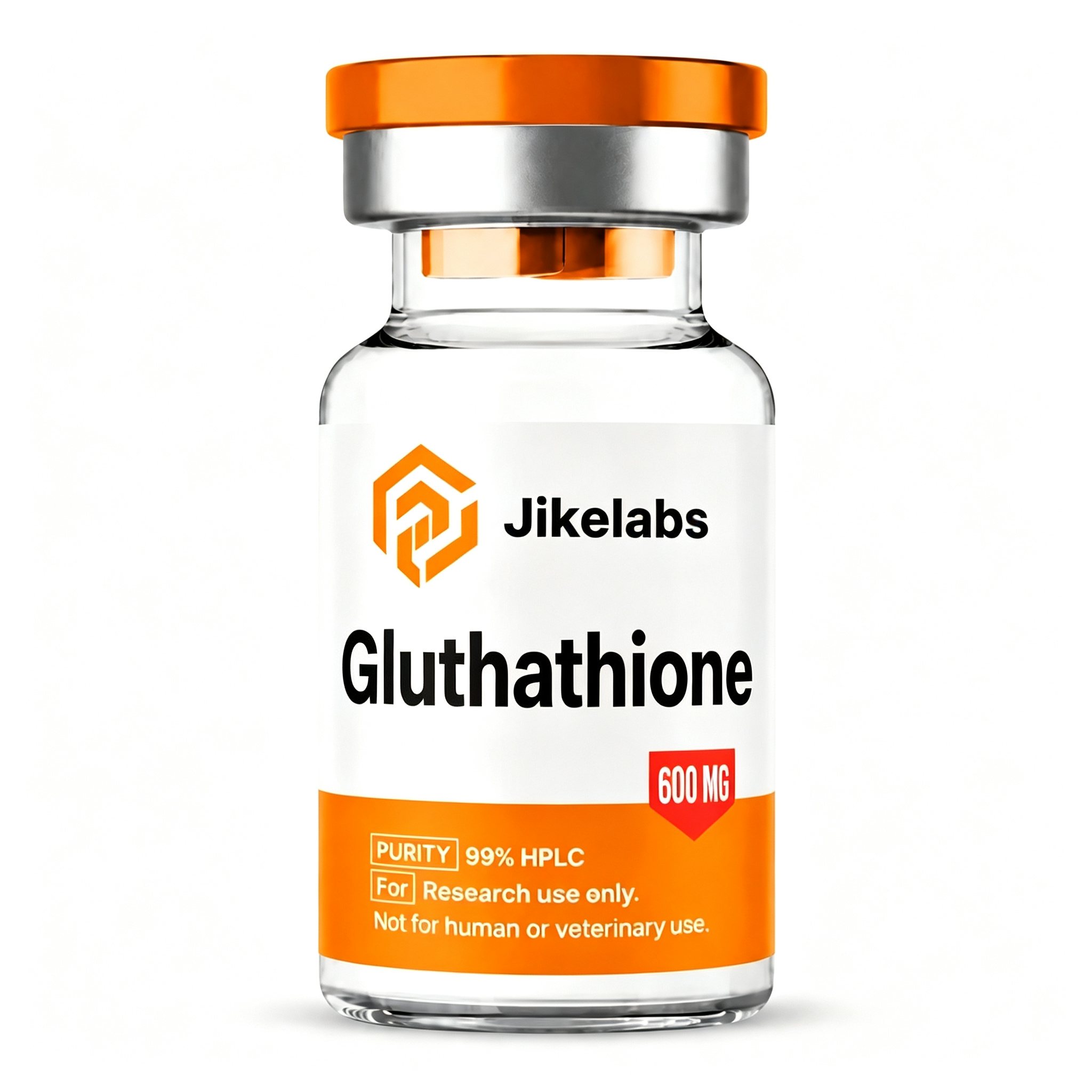
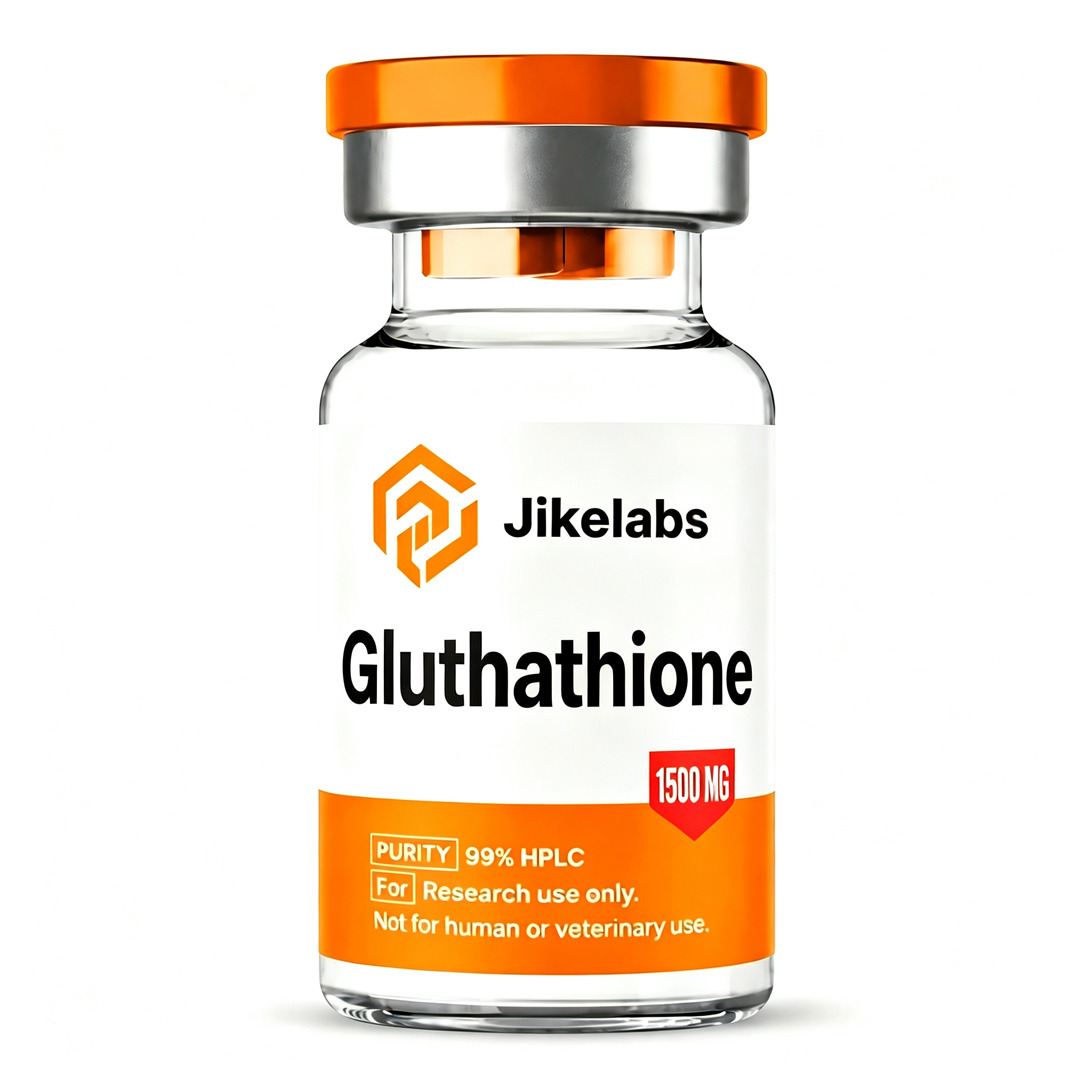
Gluthathione 600MG 1500MG
Glutathione (γ‑L‑glutamyl‑L‑cysteinyl‑glycine) is an endogenous tripeptide and the major intracellular "master antioxidant" widely used for laboratory research.
In pre‑clinical experiments, it acts as a core regulator of cellular redox homeostasis. It directly scavenges reactive oxygen species (ROS) and free radicals, protects cells from oxidative damage. It serves as a key co‑factor for phase‑II detoxification enzymes, participating in toxin and heavy‑metal conjugation studies. Research also covers mitochondrial stability, immune cell function, inflammatory signaling and melanogenesis‑related pathways.
-
Detail
Glutathione (Reduced) GSH Powder
The Master Antioxidant | Reduced-Form γ-L-Glutamyl-L-Cysteinyl-Glycine
High-Purity Crystalline Powder · CAS 70-18-8 · Food & Supplement Grade Available
🛡 The Master Antioxidant
The body's most abundant intracellular antioxidant — present in virtually every cell, with the highest concentration in the liver.
♻️ Reduced & Bioactive
Supplied in the reduced (GSH) form — the active thiol state ready to neutralize free radicals and support detox pathways.
🧪 High Purity
≥ 99% (HPLC) white crystalline powder, with lot-specific COA and full heavy-metal / microbiology testing.
📦 Flexible Formats
Bulk powder ideal for dietary supplements, functional foods, beverages and cosmetic formulations.
Product Overview
Glutathione (γ-L-Glutamyl-L-Cysteinyl-Glycine, abbreviated GSH) is a naturally occurring tripeptide composed of glutamate, cysteine and glycine, linked through a characteristic γ-glutamyl bond. It is widely described as the body's "master antioxidant": it is found in virtually every cell and serves as a first-line defense against oxidative stress, a central player in detoxification, and a supporter of healthy immune function.
This product is supplied in the reduced form (GSH), which is the biologically active state. The reactive thiol (-SH) group on the cysteine residue is the functional site that directly neutralizes free radicals and conjugates toxins. After donating electrons, glutathione becomes oxidized (GSSG) and is efficiently recycled back to GSH by glutathione reductase — a continuous cycle that underpins its role in cellular defense.
Our glutathione is a high-purity white crystalline powder suitable for dietary-supplement, functional-food and cosmetic-formulation use.
Specifications
Product Name Glutathione (Reduced), L-Glutathione Reduced, GSH CAS Number 70-18-8 Amino Acid Composition γ-L-Glutamyl-L-Cysteinyl-Glycine (Glu–Cys–Gly, γ-glutamyl linkage) Molecular Formula C10H17N3O6S Molecular Weight 307.33 g/mol Form Reduced form (GSH) — the biologically active state Appearance White crystalline powder, odorless Melting Point 192–195 °C Assay / Purity ≥ 99% (HPLC) Net Content 600mg/1500mg Solubility Freely soluble in water; sparingly soluble in ethanol; insoluble in ether Storage Store in a cool, dry, well-sealed container away from light and moisture (recommended 2–8 °C for long-term). Protect from oxidation. The Glutathione Redox Cycle
⚡ GSH (reduced) — the active antioxidant form. The cysteine thiol (-SH) group donates an electron to neutralize free radicals and reactive oxygen species (ROS).
🔁 GSSG (oxidized) — once it donates electrons, two glutathione molecules link via a disulfide bond to form oxidized glutathione.
♻️ Recycling — the enzyme glutathione reductase (using NADPH) regenerates GSSG back to GSH, sustaining the cellular antioxidant pool. The GSH : GSSG ratio is a widely used marker of cellular redox/oxidative-stress status.
Key Roles in the Body
🛡 Antioxidant defense — directly scavenges free radicals and serves as a cofactor for antioxidant enzymes such as glutathione peroxidase. 🧹 Detoxification support — via glutathione-S-transferase, GSH conjugates xenobiotics and heavy metals to support their elimination. 🧬 Cellular protection — helps protect proteins, lipids and DNA from oxidative damage. 🧩 Immune-function support — contributes to normal immune-cell function and redox balance. 🌿 Skin-support role — used in cosmetic formulations where it is associated with antioxidant and skin-tone-supporting properties. Reduced GSH vs Oxidized GSSG
Aspect Reduced GSH (this product) Oxidized GSSG Thiol State Free -SH group (active) Disulfide bond (G-S-S-G) Antioxidant Activity Biologically active — ready to neutralize ROS Spent form; must be recycled back to GSH Typical Share in Healthy Cells ~90%+ of total glutathione pool Small fraction (rises with oxidative stress) Why It Matters A higher GSH:GSSG ratio reflects better redox balance Elevated GSSG is a marker of oxidative stress Common Applications
💊 Dietary supplements — oral antioxidant / detox-support capsules, tablets and powders. 🥤 Functional foods & beverages — antioxidant ingredient in fortified drinks and wellness products. 🧴 Cosmetics & skincare — serums and creams where glutathione is used for antioxidant and skin-tone-supporting benefits. 🔬 Biochemistry / cell-culture — reagent for redox, oxidative-stress and GSH-assay workflows (BioReagent grade available on request). Usage & Handling Guidance
🧂 Freely water-soluble; dissolve directly in water or your formulation vehicle. For best stability, add during the cool-down phase of hot processes. 🧊 Store in a tightly sealed, light-resistant container under cool, dry conditions; refrigeration (2–8 °C) extends shelf life. Avoid repeated exposure to air and moisture to minimize oxidation. ⚗️ Glutathione is sensitive to heat, light and oxidants — protect from strong oxidizing agents and prolonged high-temperature processing. Quality Assurance
✔ Lot-specific Certificate of Analysis: HPLC assay confirmation, identification, and related-substance profiling.
✔ Heavy metals (Pb, As, Cd, Hg), microbiology (total plate count, yeast/mold, E. coli, Salmonella) and residual-solvent testing performed per specification.
✔ Third-party testing documentation available upon request.
References & Further Reading
- Glutathione — PubChem CID 124886 (CAS 70-18-8, C₁₀H₁₇N₃O₆S, MW 307.33; roles: antioxidant, cofactor, geroprotector).
- Forman HJ, Zhang H. Targeting oxidative stress in disease: promise and limitations of antioxidant therapy. Nat Rev Drug Discov. 2021.
- Wu G, et al. Glutathione metabolism and its implications for health. J Nutr. 2004;134(3):489-492.
- Pizzino G, et al. Oxidative stress: harms and benefits for human health. Oxid Med Cell Longev. 2017.
Disclaimer: This product is offered as a nutritional / functional ingredient for dietary-supplement, food and cosmetic formulation. These statements have not been evaluated by the Food and Drug Administration (FDA). This product is not intended to diagnose, treat, cure, or prevent any disease. Please comply with the food/supplement regulations and labeling requirements of your target market. For research-grade (BioReagent) material, request the research-use documentation separately. -
Customer ReviewsNo comments