
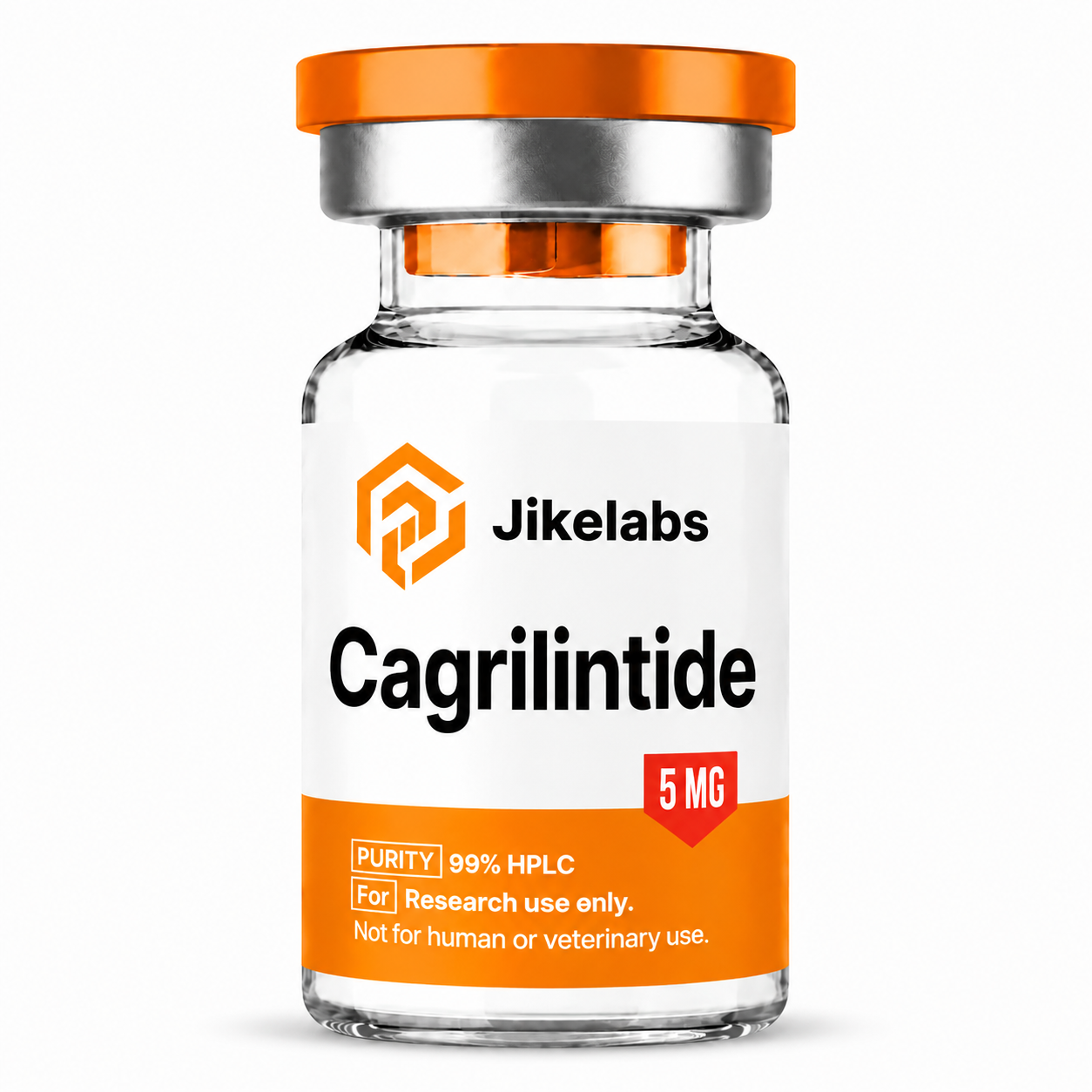
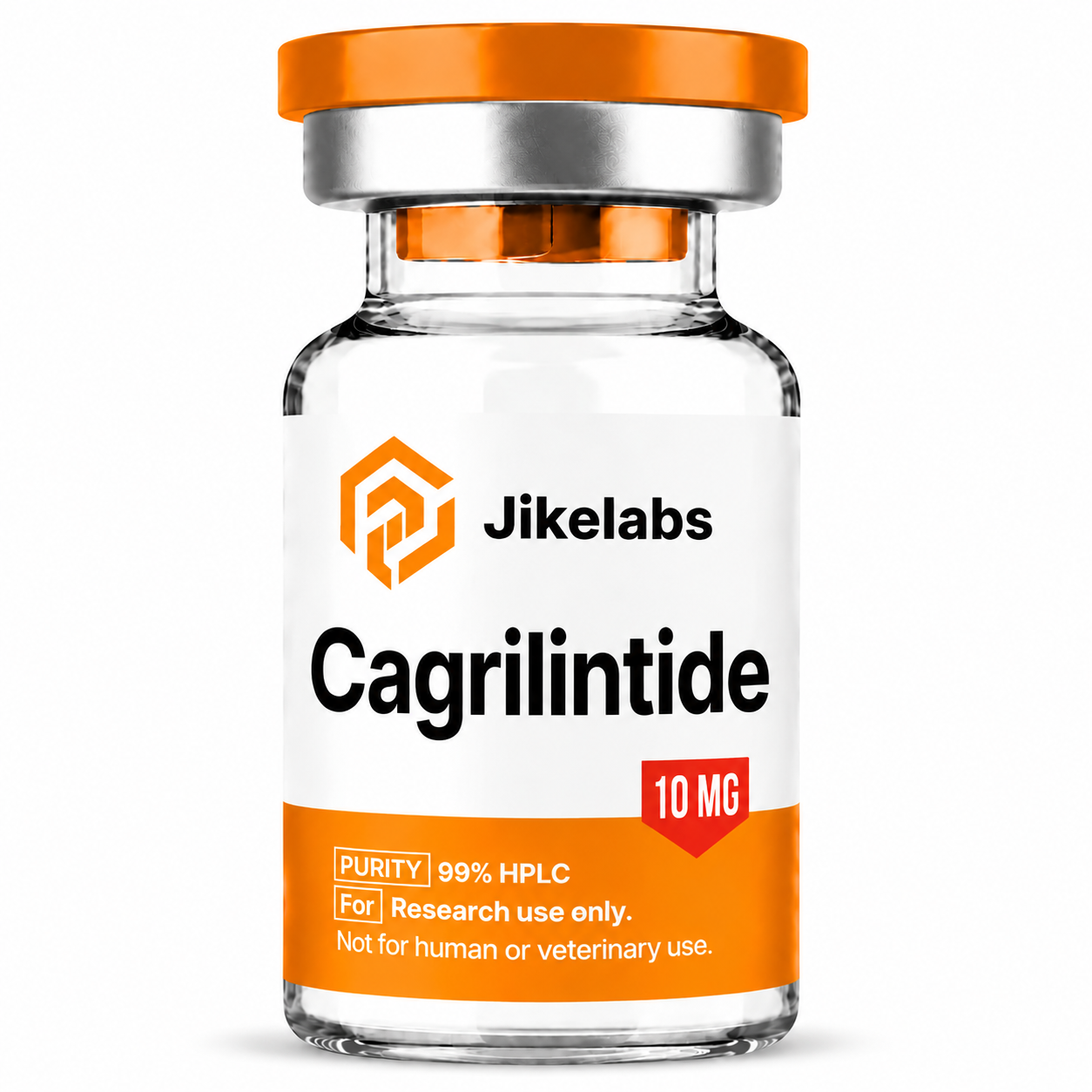
cagrilintide 5MG 10MG
-
Detail
Cagrilintide 5mg 10mg
Long-Acting Amylin Analog | Dual Amylin & Calcitonin Receptor Agonist (DACRA)
Lyophilized Powder for Maximum Stability · Research Use Only
⏱ Long-Acting
Half-life of approximately 7–8 days, supporting infrequent dosing schedules.
🎯 Dual Mechanism
Activates both amylin and calcitonin receptors for multi-target metabolic modulation.
📊 Backed by Trials
Demonstrated weight-loss and glycemic-control effects in phase 1/2 clinical studies.
🧊 Stable Form
Supplied as lyophilized powder to ensure maximum stability during storage and shipping.
Product Overview
Cagrilintide is a novel long-acting amylin analog and a dual amylin and calcitonin receptor agonist (DACRA), engineered on the structural framework of native amylin. By activating both the amylin receptor and the calcitonin receptor, it has the potential to modulate key metabolic parameters, including body weight and blood glucose levels.
Native amylin — a hormone co-secreted with insulin by pancreatic β-cells — induces satiety and reduces food intake, inhibits postprandial glucagon release, and delays gastric emptying. However, its clinical utility is limited by a short half-life. Cagrilintide overcomes this limitation as a lipidated, long-acting analog with a half-life of approximately 7–8 days, markedly reducing dosing frequency and improving compliance in research settings.
Specifications
Product Name Cagrilintide Specification 5 mg / 10mg CAS Number 1415456-99-3 Amino Acid Sequence Pyr-KCNTATCATQRLAEFLRHSSNNFGPILPPTNVGSNTP Molecular Formula C174H269N45O52S2 Molecular Weight 4409 g/mol Physical Form Lyophilized powder Purity ≥ 99% (by HPLC) Storage Store at -20°C, protected from light and moisture Mechanism of Action
As a long-acting amylin analog, Cagrilintide mimics the physiological action of native amylin while offering superior stability. Its key pharmacological pathways include:
✔ Satiety induction — activates amylin receptors in the brain (area postrema pathway), stimulating the satiety center and reducing food intake. ✔ Glucagon suppression — inhibits postprandial glucagon release, helping blunt post-meal glucose spikes. ✔ Gastric emptying delay — slows gastric emptying via central nervous system signaling, prolonging nutrient residence time. ✔ Glucose homeostasis — contributes to stable blood glucose through combined effects on insulin/glucagon regulation. Clinical Research Highlights
Phase 2 dose-finding trial (The Lancet, 2021)
In a multicenter, randomized, double-blind, placebo-controlled and active-controlled trial, mean weight reduction from baseline across all Cagrilintide doses (0.3–4.5 mg) was 6.0%–10.8%, versus 3.0% with placebo. The 4.5 mg group also achieved greater weight loss than liraglutide 3.0 mg (10.8% vs. 9.0%).Combination potential — CagriSema (The Lancet, 2023)
Cagrilintide and the GLP-1 receptor agonist semaglutide act through distinct yet complementary mechanisms. Co-administration of once-weekly cagrilintide 2.4 mg with semaglutide 2.4 mg in type 2 diabetes produced pronounced effects on both glycemic control and body weight.Tolerability
Across phase 1b/2 trials, cagrilintide — alone or combined with semaglutide — was well tolerated. The most commonly reported adverse events were gastrointestinal disorders and injection-site reactions, predominantly mild to moderate in severity.Storage & Handling
🧊 Keep lyophilized vials frozen (recommended -20°C), away from light and moisture. 💧 Reconstitute with bacteriostatic or sterile water according to your research protocol; handle gently to avoid foaming. 📦 Ship with cold-chain packaging to preserve peptide integrity. Key References
- Kruse T, Hansen JL, Dahl K, et al. Development of Cagrilintide, a Long-Acting Amylin Analogue. J Med Chem. 2021;64(15):11183-11194.
- Lau DCW, Erichsen L, Francisco AM, et al. Once-weekly cagrilintide for weight management in people with overweight and obesity: a multicentre, randomised, double-blind, placebo-controlled and active-controlled, dose-finding phase 2 trial. Lancet. 2021;398(10317):2160-2172.
- Frias JP, Deenadayalan S, Erichsen L, et al. Efficacy and safety of co-administered once-weekly cagrilintide 2.4 mg with once-weekly semaglutide 2.4 mg in type 2 diabetes: a phase 2 trial. Lancet. 2023;402(10403):720-730.
- Enebo LB, Berthelsen KK, Kankam M, et al. Safety, tolerability, pharmacokinetics, and pharmacodynamics of concomitant administration of multiple doses of cagrilintide with semaglutide 2.4 mg for weight management: a phase 1b trial. Lancet. 2021;397(10286):1736-1748.
- D'Ascanio AM, Mullally JA, Frishman WH. Cagrilintide: A Long-Acting Amylin Analog for the Treatment of Obesity. Cardiol Rev. 2024;32(1):83-90.
Disclaimer: All products and information presented are for research and educational purposes only. This product is intended exclusively for in-vitro research use. It is not a pharmaceutical product, has not been approved by the U.S. Food and Drug Administration (FDA), and must not be used to prevent, treat, or cure any medical condition in humans or animals. -
Customer ReviewsNo comments