
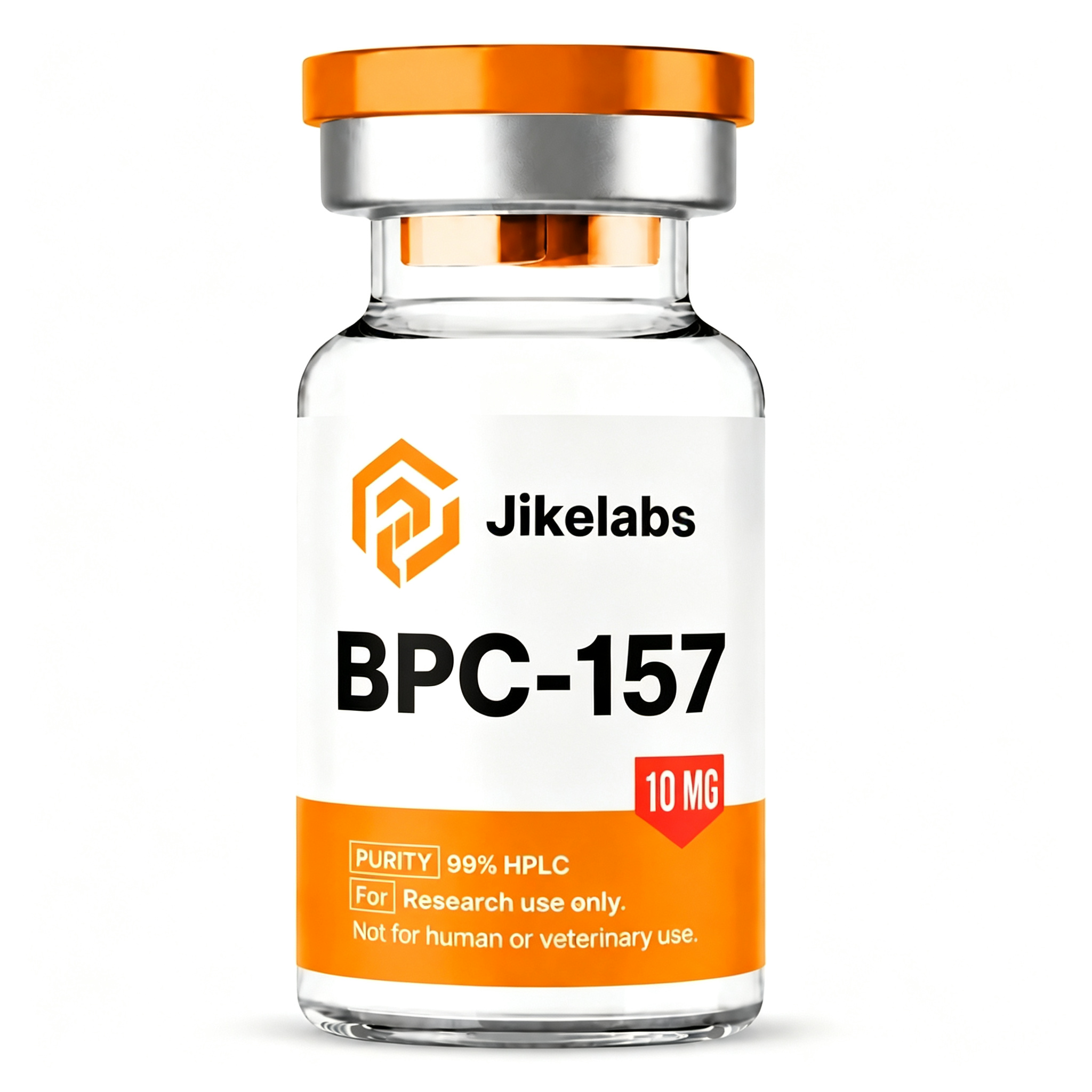
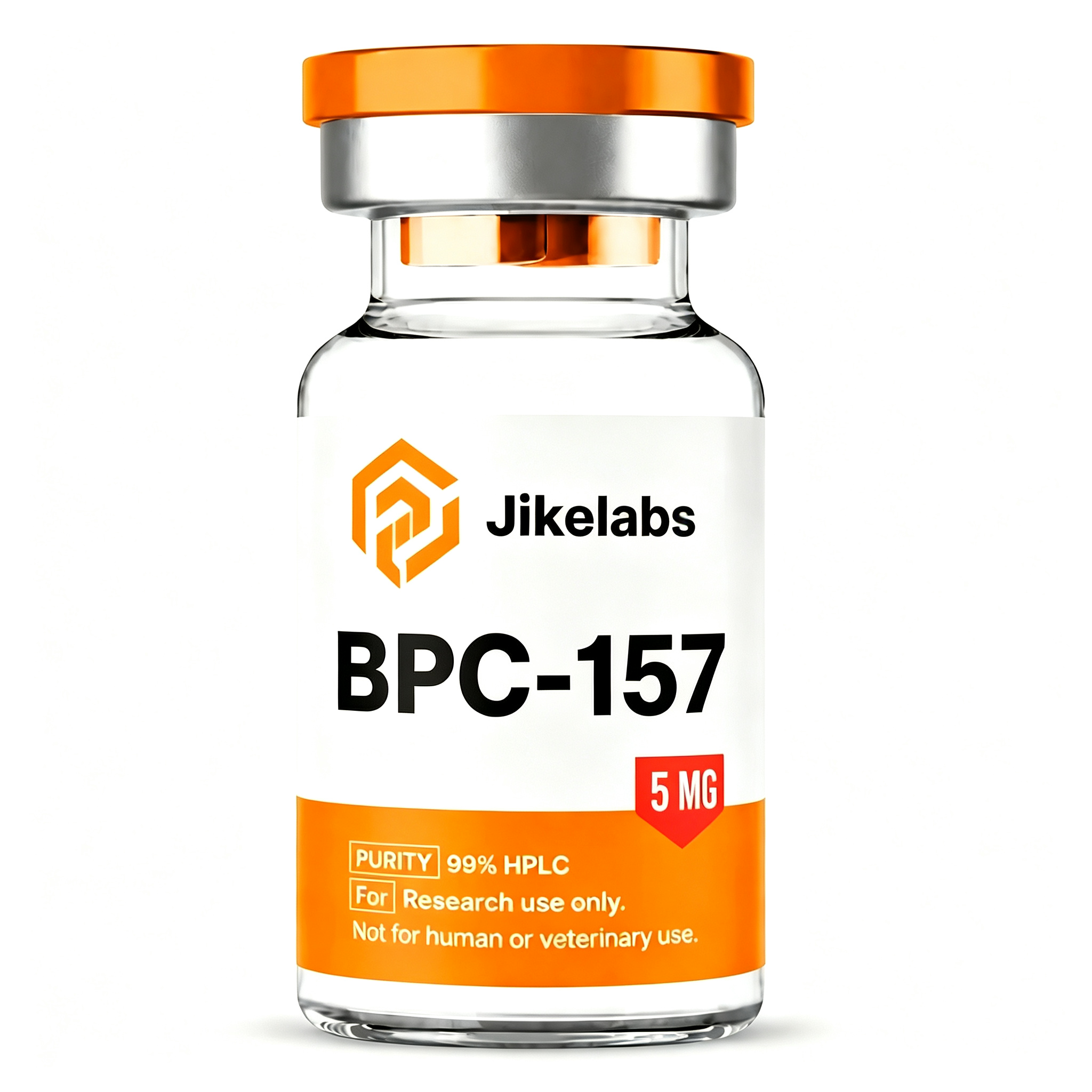
BPC-157 5MG 10MG
-
Detail
BPC-157 5mg
Body Protection Compound-157 | The Gastric Pentadecapeptide of Tissue-Repair Research
15-Amino-Acid Cytoprotective Peptide · Lyophilized Powder · Research Use Only
🩹 The Repair Workhorse
One of the most extensively studied tissue-repair peptides — angiogenesis, wound healing, and cytoprotection across multiple tissue models.
🧬 Gastric Origin
A partial sequence of the body protection compound found in human gastric juice — first described in 1993.
⚗️ Exceptional Stability
Unusually stable peptide backbone — retains activity in gastric-juice-mimicking conditions, a rarity among peptides.
📚 36-Study Review
A 2025 systematic review of 36 studies confirmed improved structural and biomechanical outcomes in tendon, ligament, muscle and bone injury models.
Product Overview
BPC-157 (Body Protection Compound-157) is a synthetic pentadecapeptide — a chain of 15 amino acids — originally identified as a partial sequence of the body protection compound (BPC) found in human gastric juice. First described in the scientific literature in 1993 by Sikirić and colleagues, it has since become one of the most widely investigated peptides in wound-healing, angiogenesis and cytoprotection research.
BPC-157 is noted for its exceptional biochemical stability — unlike most peptides, it remains active under gastric conditions, which underpins its long research history in gastrointestinal protection. Across preclinical models, it has been associated with accelerated healing of tendons, ligaments, muscles, skin burns and bone injuries, as well as cytoprotective effects in liver and vascular ischemia-reperfusion models. A key mechanism is the promotion of new blood-vessel formation via the VEGFR2 pathway, supplying the oxygen and nutrients that damaged tissue needs to rebuild.
Each vial contains 5mg of high-purity BPC-157 as a white to off-white lyophilized powder, supplied for research use only. 【请核实:按实际规格修改(常见 5/10mg)】
Specifications
Product Name BPC-157 (Body Protection Compound-157) Synonyms Bepecin · PL 14736 · PL 10 · Gastric Pentadecapeptide CAS Number 137525-51-0 Amino Acid Sequence H-Gly-Glu-Pro-Pro-Pro-Gly-Lys-Pro-Ala-Asp-Asp-Ala-Gly-Leu-Val-OH (15 residues) Molecular Formula C62H98N16O22 Molecular Weight 1419.5 g/mol Net Content 5 mg / vial Appearance White to off-white lyophilized powder Purity ≥ 99% (by HPLC) Solubility Soluble in water Storage Store at 2–8°C; for long-term storage, freeze and protect from light and moisture Mechanism of Action
✔ Angiogenesis — upregulates VEGFR2 expression and activates the VEGFR2-Akt-eNOS pathway in endothelial cells, promoting new blood-vessel formation that supplies healing tissue (Hsieh et al., 2017). ✔ Tendon & fibroblast repair — promotes fibroblast outgrowth, cell survival under oxidative stress, and migration via the FAK-paxillin pathway (Chang et al., 2011). ✔ Growth-factor signaling — associated with increased EGF and FGF levels that drive tissue rebuilding in wound models. ✔ Cytoprotection — membrane-stabilizing activity documented in gastric, hepatic and vascular ischemia-reperfusion models. ✔ NO-system modulation — modulates nitric oxide pathways, supporting local blood flow during the healing response. Research Highlights
📖 2025 Systematic Review — 36 Studies
A systematic review of 36 studies (35 preclinical, 1 clinical) found BPC-157 improved structural and biomechanical outcomes in ligament, tendon, muscle and bone injury models — the broadest evidence base among repair peptides.
📖 Huang et al. — Alkali-Burn Wound Healing
Demonstrated that BPC-157 enhances chemical-burn wound healing in vivo and promotes proliferation, migration and angiogenesis in vitro.
📖 Sikirić et al., 2024 (Pleiotropic Activity Review)
Summarized BPC 157's pleiotropic beneficial activity — noting encouraging but still limited clinical evidence, including a phase II study in ulcerative colitis, and a favorable safety profile in the reported trials.
Evidence Status & Compliance Notes
📋 Evidence level: the BPC-157 literature is predominantly preclinical (rodent and in-vitro models). As of 2026, no large-scale peer-reviewed human clinical trials have been published — we present this honestly so researchers can evaluate the evidence appropriately.
🏛 Regulatory movement: in July 2026, the FDA Pharmacy Compounding Advisory Committee voted (8–6–1) in an advisory capacity supporting placement of BPC-157 on the 503A bulk-drug-substances list. This is a non-binding advisory vote, not a final approval.
⚠️ Sports status: BPC-157 is prohibited by WADA and listed on the USADA prohibited list. Buyers conducting sports-related or anti-doping-context research should factor this in.
Research Applications
🦴 Musculoskeletal repair models — tendon, ligament, muscle and bone injury studies. 🩹 Wound-healing and burn-injury models, including angiogenesis readouts. 🫀 Ischemia-reperfusion and cytoprotection research (gastric, hepatic, vascular models). 🧠 Emerging gut-brain-axis and neuroprotection investigation areas. ⚗️ Frequently paired with TB-500 and GHK-Cu in multi-pathway repair research — see our GLOW 70 / KLOW 80 blends. Reconstitution & Handling
💧 Add sterile or bacteriostatic water slowly down the side of the vial; swirl gently until fully dissolved — do not shake vigorously. 🧪 Aliquot reconstituted solution to avoid repeated freeze-thaw cycles. 🧊 Lyophilized powder is hygroscopic — keep vials sealed, frozen (-20°C) and protected from light and moisture for long-term stability; reconstituted solution: refrigerate and use within your validated stability window. ⚖️ Handle with aseptic technique and appropriate PPE per your laboratory SOP. Quality Assurance
✔ Lot-specific Certificate of Analysis: HPLC purity confirmation + mass-spectrometry identity verification.
✔ Third-party batch testing documentation available upon request.
References & Further Reading
- Hsieh MJ, Liu HT, et al. Therapeutic potential of pro-angiogenic BPC157 is associated with VEGFR2 activation and up-regulation. J Mol Med. 2017;95(3):323-333.
- Chang CH, Tsai WC, et al. The promoting effect of pentadecapeptide BPC 157 on tendon healing involves tendon outgrowth, cell survival, and cell migration. J Appl Physiol. 2011;110(3):774-780.
- Huang T, Zhang K, et al. Body protective compound-157 enhances alkali-burn wound healing in vivo and promotes proliferation, migration, and angiogenesis in vitro. PMC4425239.
- Sikirić P, et al. The stable gastric pentadecapeptide BPC 157 pleiotropic beneficial activity. Pharmaceuticals. 2024. (PMC11053547)
- Emerging use of BPC-157 in orthopaedic sports medicine — systematic review of 36 studies. PMC12313605. 2025.
Disclaimer: This product is intended exclusively for in-vitro laboratory research use. It is not approved for human or animal use, is not a drug, food, cosmetic, or dietary supplement, and is not intended to diagnose, treat, cure or prevent any disease. Research findings cited above are predominantly from preclinical models. All products are supplied strictly for research purposes only. -
Customer ReviewsNo comments