
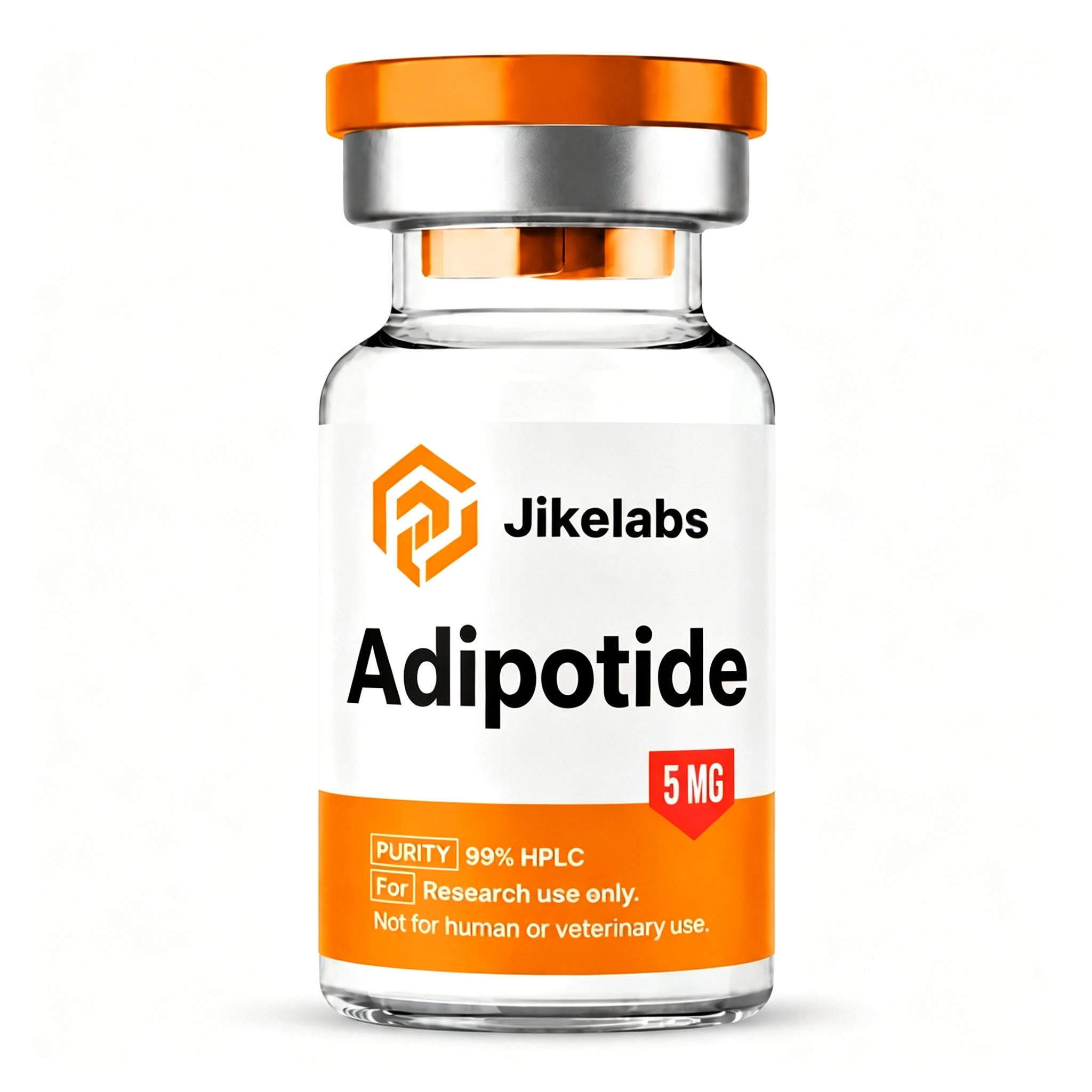
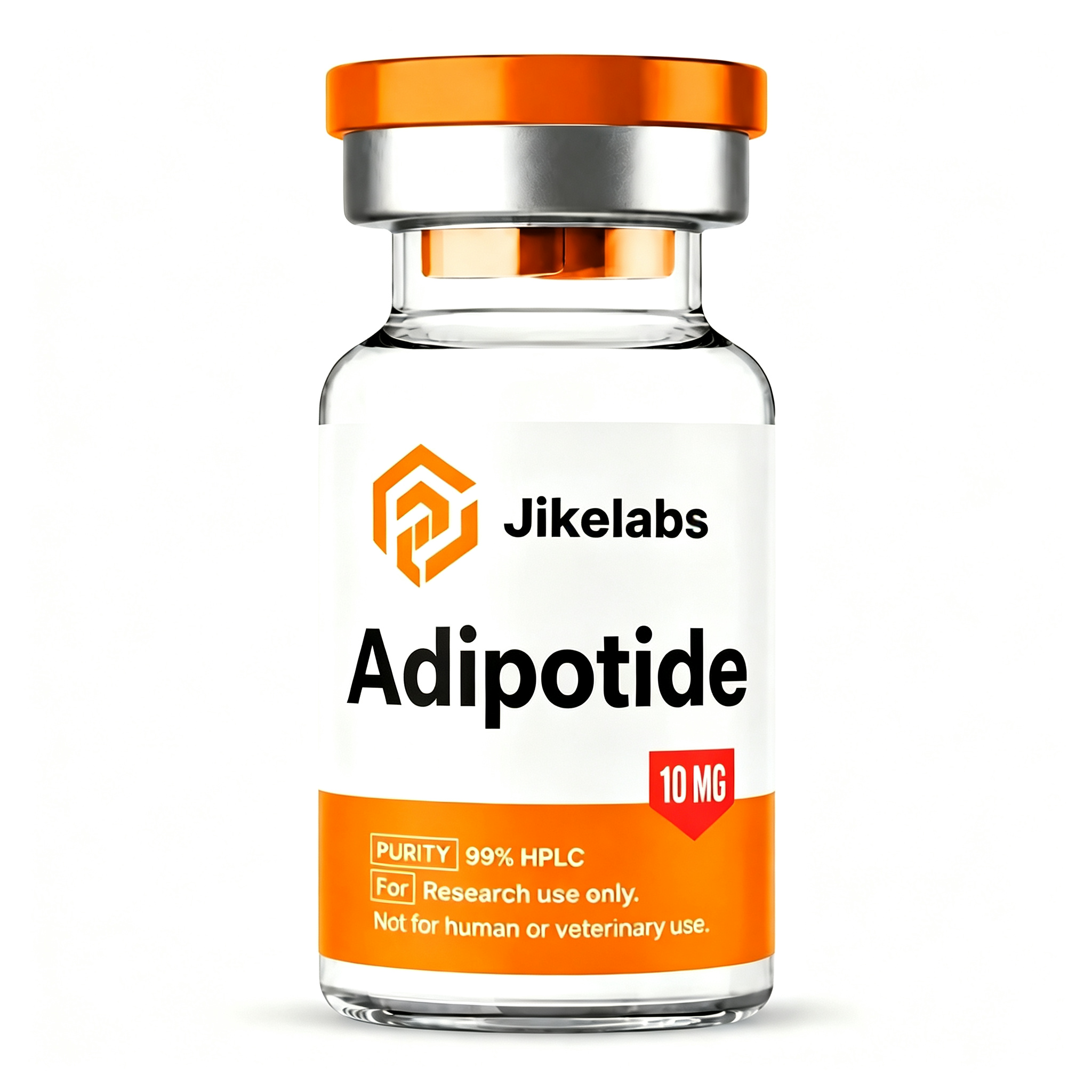
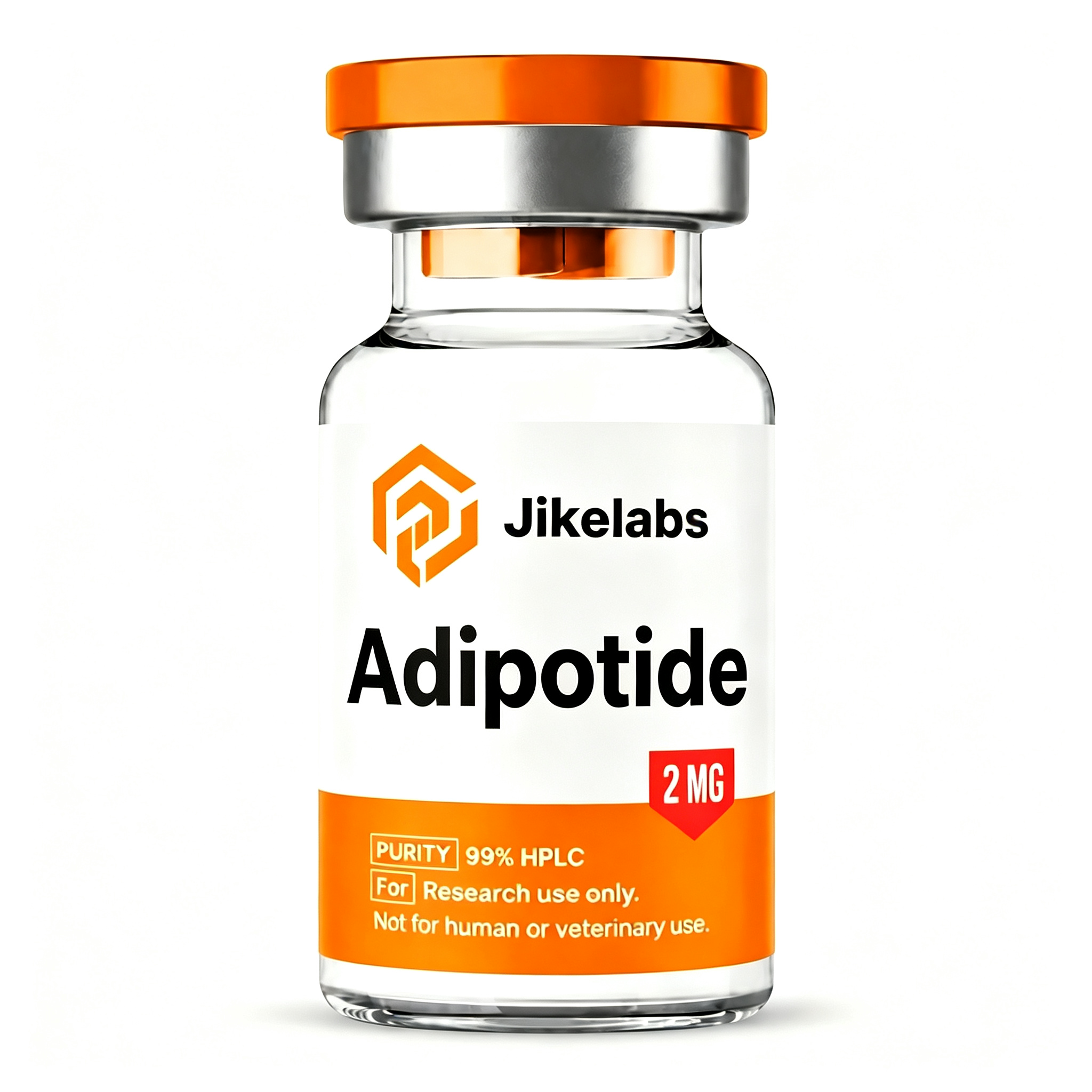
Adipotide 2MG 5MG
-
Detail
Adipotide (FTPP) 10mg
Prohibitin-Targeting Peptide | White-Fat-Selective Research Peptide
Bipartite Targeting + Payload Design · Lyophilized Powder · Research Use Only
🎯 Fat-Vessel Targeting
The CKGGRAKDC module binds prohibitin on white-adipose blood-vessel endothelium — selective delivery by design.
🧬 Bipartite Design
Two modules in one molecule: a homing sequence plus a pro-apoptotic D(KLAKLAK)2 payload.
📚 Peer-Reviewed Backing
Weight-loss and fat-mass effects documented in mouse and non-human-primate models (Science Translational Medicine, 2011).
🧊 High-Purity Lyophilized
Freeze-dried powder, no fillers; water-soluble for straightforward reconstitution.
Product Overview
Adipotide (also known as FTPP, Prohibitin-Targeting Peptide) is a rationally designed, bipartite peptidomimetic originally developed to selectively target the blood vessels of white adipose tissue. Unlike appetite-based approaches, Adipotide acts on the vascular supply that fat tissue depends on, making it a distinctive research tool in obesity and metabolic science.
The molecule combines two functional modules linked by a short GG spacer: the nine-amino-acid CKGGRAKDC homing sequence — identified by phage display for its affinity to prohibitin expressed on white-fat vasculature endothelium — and the D(KLAKLAK)2 pro-apoptotic peptide payload. Once delivered to the target endothelium, the payload is internalized and disrupts mitochondrial membranes, inducing apoptosis selectively in the targeted cells.
In landmark preclinical studies, Adipotide caused significant reductions in body weight and fat mass in diet-induced obese mice, and comparable effects were observed in obese rhesus monkeys — with no evidence of lipid accumulation in the liver or arterial walls in those models.
Specifications
Product Name Adipotide (FTPP) Synonyms Adipotide™ · Prohibitin-Targeting Peptide (PTP) · FTPP CAS Number 859216-15-2 Amino Acid Sequence CKGGRAKDC-GG-D(KLAKLAK)2 Molecular Weight ≈ 2520 g/mol Net Content 5mg、10 mg / vial Physical Form White to off-white lyophilized powder Purity ≥ 99% (by HPLC) Solubility Water-soluble Storage Store at 2–8°C; for long-term storage, freeze and protect from light and moisture Bipartite Mechanism of Action
Module Function ① Targeting Module
CKGGRAKDCA nine-amino-acid homing sequence isolated via phage display, with affinity for prohibitin — a protein displayed on the endothelial surface of white-adipose blood vessels. This gives Adipotide its fat-tissue selectivity. ② Payload Module
D(KLAKLAK)2An amphipathic pro-apoptotic peptide. After receptor-mediated internalization into target endothelial cells, it disrupts mitochondrial membranes and triggers apoptosis — selectively eliminating the blood-vessel supply of white fat. ③ Net Effect Loss of white-adipose vascular support leads to fat-tissue involution and measurable reductions in body weight and fat mass in animal models — a mechanism distinct from appetite suppression. Research Highlights
📖 Barnhart et al., 2011 (Science Translational Medicine)
A peptidomimetic targeting white fat (CKGGRAKDC-GG-D(KLAKLAK)2) caused significant weight loss in diet-induced obese mice, with comparable reductions in body weight and fat mass observed in obese rhesus monkeys — without lipid accumulation in the liver or arterial walls.
📖 Kim et al., 2010 (apoptosis-mechanism study)
Characterized the peptide's design logic: a fat-endothelium-homing sequence fused to a pro-apoptotic payload potently reduced body weight in animal models, establishing the bipartite targeting paradigm Adipotide is built on.
🏛 Clinical Development History
Adipotide entered early-phase clinical investigation for obesity and type-2-diabetes indications in the 2010s under Arrowhead Research/Adipo Therapeutics, and continues to be referenced in anti-angiogenic nanotherapy and adipose-targeting research. Note: human-efficacy evidence remains limited; the compound is supplied here strictly as a research reagent.
Research Applications
🔬 White-adipose vasculature biology and angiogenesis studies. ⚖️ Obesity and body-composition research models (rodent and NHP literature basis). 🎯 Ligand-directed drug-delivery and targeted-apoptosis platform research (CKGGRAKDC as a targeting ligand). 🧫 In-vitro endothelial-cell assays: binding, internalization and apoptosis readouts. Reconstitution & Handling
💧 Add sterile or bacteriostatic water slowly down the side of the vial; swirl gently until fully dissolved — do not shake vigorously. 🧪 Aliquot reconstituted solution to avoid repeated freeze-thaw cycles. 🧊 Lyophilized vials: store frozen (-20°C), protected from light, for long-term stability; reconstituted solution: refrigerate and use within your laboratory's validated stability window. ⚖️ Handle with aseptic technique and appropriate PPE per your laboratory SOP. Quality Assurance
✔ Lot-specific Certificate of Analysis: HPLC purity confirmation + mass-spectrometry identity verification.
✔ Third-party batch testing documentation available upon request.
References & Further Reading
- Barnhart KF, Christianson DR, Hanley PW, et al. A peptidomimetic targeting white fat causes weight loss and improved metabolic parameters in obese monkeys. Science Translational Medicine. 2011;3(108):108ra112.
- Kim DH, Xia J, Zang S, et al. Peptide designed to elicit apoptosis in adipose tissue endothelium reduces body weight. Proceedings of the National Academy of Sciences. 2010. (PMC2844838)
- Anti-angiogenic nanotherapy via active targeting systems to tumors and adipose tissue vasculature. Biomaterials Science. 2015;3(9):1253.
- Anti-angiogenic nanotherapy for the control of obesity. Nanomedicine. 2013.
- Prohibitin-targeting peptide 1 — Wikipedia (sequence and CAS reference).
Disclaimer: This product is intended exclusively for in-vitro laboratory research use. It is not approved for human or animal use, is not a drug, food, cosmetic, or dietary supplement, and is not intended to diagnose, treat, cure or prevent any disease or condition. Weight-loss findings cited above are from animal-model studies and do not imply human efficacy. All products are supplied strictly for research purposes only. -
Customer ReviewsNo comments